Jes Wienberg - Nama Orang;
E-book Heritopia : World Heritage and Modernity
Lund University Press · 2021
Penilaian
0,0
dari 5Informasi Detail Buku
ISBN/ISSN
9789198469936
Penerbit
Lund University Press
Tahun Terbit
2021
Halaman
336 hlm
Bahasa
English
Klasifikasi
069
No. Panggil
069 WIE h
Subjek
Sinopsis
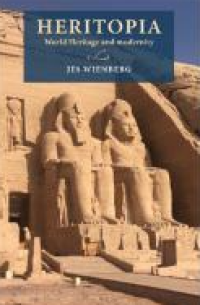
The pharaoh had been able to look at his reflection in the Nile for thousands of years. But now his face was sawn off, raised, and removed. One by one, stone blocks from the colossal statues were removed from the site. Was this because of a desire to obliterate the memory of a powerful absolute ruler? Was it an example of iconoclasm, in which the face of the god was mutilated? Were the sculptures going to be moved to a museum in the West, like so many other monuments and finds from Ancient Egypt? Or was it quite simply a case of vandalism? The cliff temples of Abu Simbel were erected at the initiative of Pharaoh Ramses II, whose mummy is now exhibited in Cairo. The temples were carved directly out of the cliffs in the years around 1260 bce. The great temple fronted by the four gigantic statues of Ramses II was a homage to the pharaoh himself as divine, a homage to the gods Amun-Ra, Ra-Horakhty, and Ptah, a memorial of the Battle of Kadesh, and a marker of Egyptian mastery of the Nubian border region. Twice a year, the rays of the rising sun would pen-etrate to the statues in the furthest depths of the temple. The nearby smaller temple was a homage to Ramses himself, his favourite wife Nefertari, and the goddess Hathor (MacQuitty 1965; Desroches Noblecourt 2007: 116ff).
Ketersediaan
#
Perpustakaan SMA Kolese Loyola Semarang
069 WIE h 001315-eB-0122
001315-eB-0122
Tersedia
Lampiran Berkas
Rekomendasi Buku Lainnya
0 BukuTidak ada rekomendasi buku yang ditemukan.