
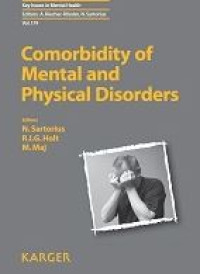
A. Baskaran - Nama Orang; D. Beran - Nama Orang; Richard I.G. Holt - Nama Orang; Mario Maj - Nama Orang;
E-book Comorbidity of Mental and Physical Disorders
Karger · 2015
Penilaian
0,0
dari 5Informasi Detail Buku
ISBN/ISSN
9783318026047
Penerbit
Karger
Tahun Terbit
2015
Halaman
202 hlm
Bahasa
English
Klasifikasi
616.89
No. Panggil
616.89 BAS c
Subjek
Sinopsis
Depression, diabetes and dementia are three disorders associated with staggering morbidity and mortality worldwide. The association between depression and dia-betes has been well established. Furthermore, both de-pression and diabetes have been shown to increase the incidence of dementia individually and synergistically. The metabolic-brain axis appears to be a key mediator connecting depression, diabetes and dementia. Brain re-gions important for cognition and emotional regulation may be damaged by the effects of hyperglycemia and insulin resistance. Indeed, insulin resistance and de-creased insulin in the central nervous system (CNS) re-sults in decreased intracellular glucose levels in frontal and subcortical regions, neurotoxicity, decreased neuro-plasticity, decreased signaling, decreased synaptic con-nectivity and disturbances in neural circuitry. The afore-mentioned changes may be attributable to brain bioenergetics wherein there is a bias toward energy con-servation. The insulin pathway also has a bidirectional in-teraction with amyloid-? oligomer formation, one of the hallmarks of Alzheimer’s disease. As well, depression may further facilitate neural circuit damage through the in-flammatory pathway, hypothalamic-pituitary-adrenal axis dysregulation, monoamine changes and lowering of neurotrophic support to the CNS. Stress and psychosocial determinants of health may also be key mediators in how these systems interact. The involvement of several path-ways may present new potential drug targets for the treatment and prevention of dementia using a lifetime approach. Systemic and intranasal insulin, oral diabetic medications, exercise, dietary changes, bariatric surgery and improved screening practices with early treatment of depression and diabetes all show promise in the treat-ment and prevention of comorbid depression, diabetes and dementia. Depression has been recognized by the World Health Organization (WHO) as one of the lead-ing causes of disability worldwide, affecting an estimated 350 million people globally [1] . De-pression has also been identified as a risk factor and poor prognostic indicator for several medi-cal comorbidities including, but not limited to, metabolic disorders such as diabetes, metabolic yndrome and obesity [2] . According to WHO estimates, diabetes, which now affects more than 350 million people globally, will be the seventh leading cause of death by 2030 [3] . Moreover, de-pression and diabetes have a well-established link as numerous investigators have shown a bi-directional association between these disorders [4] . Both depression and diabetes have been in-dependently associated as risk factors for the de-velopment of cognitive impairment and demen-tia [5, 6] .
Ketersediaan
#
Perpustakaan SMA Kolese Loyola Semarang
616.89 BAS c 003000-eB-0122
003000-eB-0122
Tersedia
Lampiran Berkas
Rekomendasi Buku Lainnya
0 BukuTidak ada rekomendasi buku yang ditemukan.