
Mango.org - Badan Organisasi;
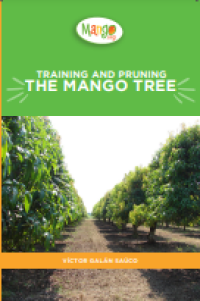
E-book The Mango Tree : Training and Pruning
Mango.org · 2022
Penilaian
0,0
dari 5Informasi Detail Buku
Penerbit
Mango.org
Tahun Terbit
2022
Halaman
30 hlm
Bahasa
English
Klasifikasi
634.4
No. Panggil
634.4 MAN m
Subjek
Sinopsis
Pruning (including training) is one of the most
important activities to be performed on a mango
plantation to obtain maximum quantitative and
qualitative yield. The main objective of pruning in
mango cultivation is to create a good tree structure
that permits good light penetration, resistance to
wind, less sensitivity to pests and diseases, and
easy application of aerial treatments and harvest
operations. Training in the tropics should be directed
towards obtaining a quick start in production.
However, in the subtropics, training should be
performed in order to avoid starting production too
early which can harm the creation of an appropriate
canopy structure before allowing the first crop.
Most mango cultivars have a rather symmetric
canopy. Earlier books devoted to mango cultivation
in the tropics recommended the removal of dead
branches and those broken by wind or weakened by
disease as the only pruning practices. At most, only
periodic control of canopy growth, both in height
and lateral dimensions, was practiced with the aid
of rotating saws in more mechanized plantings. It
was only in modern mango cultivation that special
attention was given to mango pruning in order to
create a canopy well adapted to modern intensive
mango cultivation.
important activities to be performed on a mango
plantation to obtain maximum quantitative and
qualitative yield. The main objective of pruning in
mango cultivation is to create a good tree structure
that permits good light penetration, resistance to
wind, less sensitivity to pests and diseases, and
easy application of aerial treatments and harvest
operations. Training in the tropics should be directed
towards obtaining a quick start in production.
However, in the subtropics, training should be
performed in order to avoid starting production too
early which can harm the creation of an appropriate
canopy structure before allowing the first crop.
Most mango cultivars have a rather symmetric
canopy. Earlier books devoted to mango cultivation
in the tropics recommended the removal of dead
branches and those broken by wind or weakened by
disease as the only pruning practices. At most, only
periodic control of canopy growth, both in height
and lateral dimensions, was practiced with the aid
of rotating saws in more mechanized plantings. It
was only in modern mango cultivation that special
attention was given to mango pruning in order to
create a canopy well adapted to modern intensive
mango cultivation.
Ketersediaan
#
Perpustakaan SMA Kolese Loyola Semarang
634.4 MAN m 004117-eB-0122
004117-eB-0122
Tersedia
Rekomendasi Buku Lainnya
0 BukuTidak ada rekomendasi buku yang ditemukan.