
Gregory M. Peck - Nama Orang; Ian A. Merwin - Nama Orang; Arthur Agnello - Nama Orang; Brian Caldwell - Nama Orang;
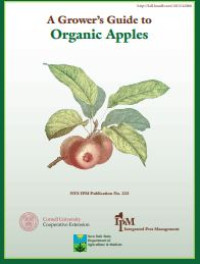
E-book A Grower's Guide to Organic Apples
Cornell University Press ·
Penilaian
0,0
dari 5Informasi Detail Buku
Penerbit
Cornell University Press
Halaman
71 hlm
Bahasa
English
Klasifikasi
634.1
No. Panggil
634.1 PEC a
Subjek
Sinopsis
Many New York fruit growers have expressed interest in producing for the organic sector, where prices are relatively high and demand is increasing. However, reliable sciencebased information for commercial organic tree fruit
production in cool humid regions such as the Northeastern United States has been difficult to find. This production guide compiles and distills information from university research trials, making the essential elements for organic apple production available to growers, extension agents, crop consultants, researchers, and others who desire to produce organic apples. The goal of this guide is to help growers produce the highest quality fruit possible, utilizing
organic techniques and systems. Few research projects in the Northeast have used organic materials exclusively, and even fewer have been conducted on certified organic farms. This is not surprising, considering that less than 0.5% of NY’s apple acreage is certified organic. Nonetheless, much research has been conducted that has direct applicability to organic systems. For example, substantial research efforts have occurred in disease and insect biocontrol, Integrated Pest Management, herbicide-free orchard floor management systems, pheromone mating disruption, and various low-input spray programs. The authors’ five years of organic apple research in Ithaca demonstrated that consistent high yields, acceptable fruit quality, and market profitability are possible in a commercial apple orchard. Additionally, apple breeders at Cornell University, the PRI breeding program, and in Europe have worked since the 1940s to develop high quality disease-resistant apples. High quality disease-resistant cultivars that are well adapted to our climate, and with fruit quality similar to mainstream cultivars, are now widely
available.
production in cool humid regions such as the Northeastern United States has been difficult to find. This production guide compiles and distills information from university research trials, making the essential elements for organic apple production available to growers, extension agents, crop consultants, researchers, and others who desire to produce organic apples. The goal of this guide is to help growers produce the highest quality fruit possible, utilizing
organic techniques and systems. Few research projects in the Northeast have used organic materials exclusively, and even fewer have been conducted on certified organic farms. This is not surprising, considering that less than 0.5% of NY’s apple acreage is certified organic. Nonetheless, much research has been conducted that has direct applicability to organic systems. For example, substantial research efforts have occurred in disease and insect biocontrol, Integrated Pest Management, herbicide-free orchard floor management systems, pheromone mating disruption, and various low-input spray programs. The authors’ five years of organic apple research in Ithaca demonstrated that consistent high yields, acceptable fruit quality, and market profitability are possible in a commercial apple orchard. Additionally, apple breeders at Cornell University, the PRI breeding program, and in Europe have worked since the 1940s to develop high quality disease-resistant apples. High quality disease-resistant cultivars that are well adapted to our climate, and with fruit quality similar to mainstream cultivars, are now widely
available.
Ketersediaan
#
Perpustakaan SMA Kolese Loyola Semarang
634.1 PEC a 005566-eB-0122
005566-eB-0122
Tersedia
Rekomendasi Buku Lainnya
0 BukuTidak ada rekomendasi buku yang ditemukan.