
Marlene Laruelle - Nama Orang;
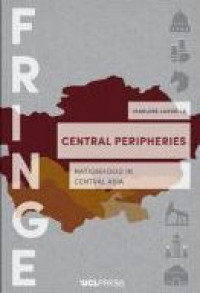
E-book Central Peripheries : Nationhood in Central Asia
UCL Press · 2021
Penilaian
0,0
dari 5Informasi Detail Buku
ISBN/ISSN
9781800080133
Penerbit
UCL Press
Tahun Terbit
2021
Halaman
264 hlm
Bahasa
English
Klasifikasi
320.01
No. Panggil
320.01 LAR c
Sinopsis
Geographically, of course, the region is central: it is one of the most landlocked spaces in the world, far from any ocean. Double-landlocked Uzbekistan is its most central state, while Urumqi, the capital of the Uyghur Xinjiang region in China, holds the record for the big city that is furthest from any ocean. Historically, too, Central Asia has been central: from centuries before the Common Era up until the sixteenth century, the region was a key venue for world products, ideas and people to be traded, exchanged and enriched. It pioneered irrigation techniques (the qanat, a network of underground canals that transport water from highland aquifers to the surface) and mastered metallurgical arts (the famous Scythian silver and gold craftmanship). During the Abbasid Caliphate, it became a key Islamic centre and, a few centuries later, one of the core pieces of the Mongol Empire. In recent years, the new Central Asian states have deployed the language of the international community to emphasize their centrality: they position themselves at the ‘crossroads’ of East and West; favour rhetorical tools such as ‘Eurasianism’ or ‘New Silk Road’; promote transcontinental trade and newspeak about shared prosperity; and have worked hard to belong simultaneously to European, Asian and Islamic international cultural and financial institutions.At the same time, however, Central Asia also has significant experience of being a periphery. It was a remote corner of the Persian-speaking world in the seventeenth and eighteenth centuries; a borderland of the Chinese, Russian and British empires in the nineteenth century; and a cul-de-sac of the Soviet Union during the Cold War decades. Today, it is often described in Western media as the backyard of both Putin’s Russia and Xi’s China, sandwiched between two neighbours with global aspirations.Central Asia’s ambivalent status as both a centre and a periphery is paralleled by two contradictory conventional narratives about the region’s place on the international scene: Central Asia as the centre of the geopolitical tensions of the post-Cold War world, where Washington, Moscow and Beijing compete for influence and display their muscles against each other, versus Central Asia as the epigone of our world, a remote region that is the least connected to global transportation infrastructure and has almost no agency over its own destiny. This binary reflects a Western-centric view of the world that magnifies the great powers, articulates normative ideas about where countries ‘fit’ on ladders of development, and seeks to rank states’ governance.
Ketersediaan
#
Perpustakaan SMA Kolese Loyola Semarang
320.01 LAR c 003107-eB-0122
003107-eB-0122
Tersedia
Lampiran Berkas
Rekomendasi Buku Lainnya
0 BukuTidak ada rekomendasi buku yang ditemukan.