
Joel Faflak - Nama Orang;
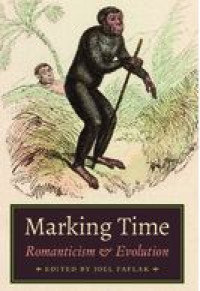
E-book Marking Time : Romanticism and Evolution
University of Toronto Press · 2018
Penilaian
0,0
dari 5Informasi Detail Buku
ISBN/ISSN
9781442644304
Penerbit
University of Toronto Press
Tahun Terbit
2018
Halaman
333 hlm
Bahasa
English
Klasifikasi
576.8
No. Panggil
576.8 FAF m
Subjek
Sinopsis
Although Victorian studies have long explored the seismic impact of On the Origin of Species (1859) on nineteenth-century culture, Charles Darwin’s text did not have an immaculate conception. The product of post-Enlightenment thought, Origin exerted considerable influence on post-1859 debates about the order of life and being well into the twentieth and twenty-first centuries. We less readily imag-ine this influence as extending backward to Romantic thought and writing. Yet mapping Romantic evolution is more than merely seeking eighteenth- and early nineteenth-century “forerunners” to the Darwinian revolution. Marking Time: Romanticism and Evolution explores Romanticism’s liminal position between the classical idea of an immutable, atemporal “great chain of being,” outlined by Arthur O. Lovejoy’s 1936 landmark study of the same name, and the rise in Romanticism of modern historiographies. This volume presents Romanticism as its own age of evolution by revisiting our notions of organicism, life, vitalism, natural history, and natural philosophy in relation to less-acknowledged notions of change and transformation in the cultural, literary, philosophical, and scientific discourses of the period. At the same time, our contributors track the remainders of Romanticism in the works of Charles Darwin, from his early reading of Word-sworth, Scott and Percy Shelley, to his study of Goethe, Schiller and Humboldt, to his lifelong interest in shared modes of subjective experience in the investigation of art and science. In general, the following essays challenge prevailing histories of evolution. Our contributors pay close attention to emergent, evolutionary themes of Romantic-era science, such as Romantic-Idealist conceptions of degeneration, morphology, species change, and organismic archetypes; the scientist’s intimate observation of the various forms of mobility and the analogical relations of plants and animals; the discovery of an anthropological concept of deep time in the art, artefacts, and travel narratives culled from voyages of exploration; and the rei-magination of the interdisciplinary relationships among related fields of inquiry, past and present, including political economy, sociology, optics, archaeology, and modern genetics.
Ketersediaan
#
Perpustakaan SMA Kolese Loyola Semarang
576.8 FAF m 003155-eB-0122
003155-eB-0122
Tersedia
Lampiran Berkas
Rekomendasi Buku Lainnya
0 BukuTidak ada rekomendasi buku yang ditemukan.