
Anthony Amicelle - Nama Orang; Valérie Amiraux - Nama Orang; Frédéric Mérand - Nama Orang; Jennifer Welsh - Nama Orang;
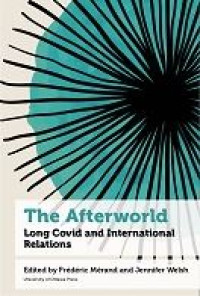
E-book The Afterworld : Long COVID and International Relations
University of Ottawa Press · 2024
Penilaian
0,0
dari 5Informasi Detail Buku
ISBN/ISSN
9780776641485
Penerbit
University of Ottawa Press
Tahun Terbit
2024
Halaman
226 hlm
Bahasa
English
Klasifikasi
571.98
No. Panggil
571.98 AMI t
Subjek
Sinopsis
In the spring of 2020, the world came to a halt. Schools, shops, and restaurants closed. Millions of people lost their jobs. Office staffmoved to teleworking while essential workers did double shifts to attend to patients or deliver food. Manufacturing almost stopped. Roads emptied. Airports shut down. This came to be known as the Great Lockdown. The COVID-19 pandemic is the most significant global crisis since the beginning of the twenty-first century. Its ramifications are sanitary and economic, of course, but also social, technological, envi-ronmental, cultural, security-related, psychological, and political. To borrow from the French sociologist Marcel Mauss, we can call it a “total social fact,” the likes of which we have not seen since the Second World War: the pandemic encompassed all spheres of human activ-ity and all dimensions of the human experience, from the physiologi-cal to the spiritual. And unlike the Second World War, the end of the Cold War, the 2008 Great Recession, or even historically recent disease outbreaks, such as Ebola, not a single country (not China with its so-called “zero-COVID policy,” and not even North Korea, the “hermit kingdom”) has been able to avoid its consequences. In some cases, the impact has been swift and dramatic, with the pandemic pushing tens of millions back into poverty and generating extreme food insecurity in communities around the globe. As the Bill & Melinda Gates Foundation put it in their 2020 Goalkeepers Report when we consider metrics of social and economic development, “we [were] set back about twenty-five years in twenty-five weeks.” In other cases, the transformations are still bubbling beneath the surface, and questions swirl as to whether necessary changes in the day-to-day behaviour of populations will be reversed or survive into the post-pandemic period.Since March 2020, there has been an explosion of analysis on the short-term impact, and possible future consequences, of COVID-19. While downloads of Albert Camus’s The Plague shot up, parallels were quickly drawn with Stefan Zweig’s evocation of Europe’s descent into poverty, nationalism, and war during the 1930s in his famous memoir, The World of Yesterday. While most commentators were understand-ably gloomy, some looked for opportunities for positive change. That requires thinking about how, in the “Afterworld,” we can work to improve the economy, social justice, the environment, gender rela-tions, health, and political institutions—or, at the very least, to ensure that they do not deteriorate further. Many ideas have been proposed for how to “build back better,” in what is probably only the beginning of a global discussion.
Ketersediaan
#
Perpustakaan SMA Kolese Loyola Semarang
571.98 AMI t 003162-eB-0122
003162-eB-0122
Tersedia
Lampiran Berkas
Rekomendasi Buku Lainnya
0 BukuTidak ada rekomendasi buku yang ditemukan.