Ditapis dengan

E-book Combustion Analysis Basics
Combustion occurs when fossil fuels, such as natural gas, fuel oil, coal or gasoline, react with oxygen in the air to produce heat. The heat from burning fossil fuels is used for industrial processes, environmental heating or to expand gases in a cylinder and push a piston. Boilers, furnaces and engines are important users of fossil fuels. Fossil fuels are hydrocarbons, meaning they are compose…
- Edisi
- -
- ISBN/ISSN
- -
- Deskripsi Fisik
- -
- Judul Seri
- -
- No. Panggil
- 541.36 TSI c

E-book Combustion Chemistry
Reaction kinetics basics: chemical mechanism structure; stoichiometry; rate equations for basic reactors; temperature and pressure dependence of rate coefficients; basic and statistical thermodynamics.
- Edisi
- -
- ISBN/ISSN
- -
- Deskripsi Fisik
- 287 hlm
- Judul Seri
- -
- No. Panggil
- 541.36 TOM c

E-book Diffusionics : Diffusion Process Controlled by Diffusion Metamaterials
- Edisi
- -
- ISBN/ISSN
- 9789819704866
- Deskripsi Fisik
- 348 hlm
- Judul Seri
- -
- No. Panggil
- 536.7 YAN d
- Edisi
- -
- ISBN/ISSN
- 9789819704866
- Deskripsi Fisik
- 348 hlm
- Judul Seri
- -
- No. Panggil
- 536.7 YAN d

E-book Transformation Thermotics and Extended Theories : Inside and Outside M…
The first level (LV1) is those transformation-related theories for designing cloak-ing, concentrating, rotating, etc. Since the theory of transformation thermotics wasproposed for controlling steady and passive heat conduction in 2008 [1,2], extendedtransformation theories have been developed successively from steady and passiveto transient and active heat conduction [3]. Then, temperature-depe…
- Edisi
- -
- ISBN/ISSN
- 9789811959080
- Deskripsi Fisik
- 342 hlm
- Judul Seri
- -
- No. Panggil
- 536.7 LIU t
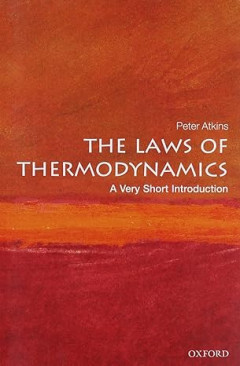
E-book The Laws of Thermodynamics: A Very Short Introduction
The laws of thermodynamics drive everything that happens in the universe. From the sudden expansion of a cloud of gas to the cooling of hot metal--everything is moved or restrained by four simple laws. Written by Peter Atkins, one of the world's leading authorities on thermodynamics, this powerful and compact introduction explains what these four laws are and how they work, using accessible lan…
- Edisi
- -
- ISBN/ISSN
- 9780199572199
- Deskripsi Fisik
- 121 halaman
- Judul Seri
- -
- No. Panggil
- 536.7 ATK t 002841-eB-0122
 Karya Umum
  Filsafat
  Agama
Agama  Ilmu-ilmu Sosial
  Bahasa
  Ilmu-ilmu Murni
  Ilmu-ilmu Terapan
  Kesenian, Hiburan, dan Olahraga
  Kesusastraan
  Geografi dan Sejarah